Wir nutzen auf unserer Website verschiedene Tools und Cookies, um unser Angebot für Sie ständig zu verbessern und Ihnen aktuelle Infos, vergleichbare Funktionen zur Verarbeitung von Endgeräteinformationen und personenbezogenen Daten geben zu können. Die Verarbeitung dient der Einbindung von Inhalten, externen Diensten und Elementen Dritter, der statistischen Analyse/Messung, der personalisierten Werbung sowie der Einbindung sozialer Medien. Je nach Funktion werden dabei Daten an Dritte weitergegeben und an Dritte in Ländern, in denen kein angemessenes Datenschutzniveau vorliegt und von diesen verarbeitet wird, z. B. die USA. Ihre Einwilligung ist stets freiwillig, für die Nutzung unserer Website nicht erforderlich und kann jederzeit auf unserer Seite abgelehnt oder widerrufen werden. Datenschutzerklärung

Company | News
Informationsbrief der Stadt Bonn informiert über Beschlüsse für 2026 Der Infobrief der Stadt Bonn, den Sie über den untenstehenden Link (Informationsbrief 2026 | Bundesstadt Bonn) aufrufen können, wurde bereits ab dem 19. Dezember 2025 gedruckt. Ab diesem Datum bzw. kurz zuvor angezeigte Änderungen werden lt. Stadt Bonn automatisch in einem späteren Bescheid berücksichtigt. Aus diesem Grund bittet die Stadt Bonn die Bürger*innen darum von einer erneuten Mitteilung oder einem Erinnerungsschreiben an das Kassen- und Steueramt abzusehen. Die Stadt Bonn stellt aufgrund jüngster Gerichtsentscheidungen, deren Auswirkungen auf Bonn derzeit noch nicht bewertet werden können, die Festsetzung der Grundsteuer 2026 zunächst zurück. Der aktuelle Abgabenbescheid beinhaltet daher zunächst ausschließlich die Berechnung der Benutzergebühren für das Jahr 2026. Die Festsetzung der Grundsteuer wird sobald wie möglich in einem gesonderten Abgabenbescheid, möglicherweise im März 2026, nachgeholt werden. Der Chatbot auf der Internetseite der Bundesstadt Bonn steht Ihnen rund um die Uhr bei Fragen, die im Zusammenhang mit dem aktuellen Abgabenbescheid stehen Ihnen zur Verfügung unter: https://www.bonn.de oder klicken Sie oben auf die Überschrift Bundesstadt Bonn Des Weiteren wird in dem Informationsbrief der Stadt Bonn darüber informiert, wie sich die Gebührensätze im Jahr 2026 für die einzelnen Positionen „Abfallentsorgung, Straßenreinigung, Schmutzwasser und Niederschlagswasser“ im Vergleich zum Vorjahr erhöhen. Grundlage dieser Beschlüsse zur Erhöhung sind die allgemein höheren Kosten aufgrund der Inflation, wie z.B. die gestiegenen und zukünftig steigenden Material- und Personalkosten etc.. Den vollständigen Informationsbrief der Stadt Bonn zur Umsetzung der Grundsteuerreform 2026, Erhöhung der Benutzungsgebühren u.a. finden Sie unten auf dieser Seite unter dem Link „Informationsbrief 2026 | Bundesstadt Bonn“.
Company | News
Supplementary information letter from the City of Bonn Bonn City Council informs about resolutions for 2025 The previously announced information letter from the City of Bonn regarding the resolution on property tax assessment rates, which will apply retroactively from January 1, 2025 (see documents below), has now also been published. Tax assessment notices were already printed by the City of Bonn on December 13, 2024. Changes notified from this date or shortly before will automatically be included in a later notice. For this reason, the City of Bonn asks citizens to refrain from further notification or sending a reminder letter to the Treasury and Tax Office. At its meeting on December 12, 2024, the Bonn City Council passed two resolutions regulating the implementation of the property tax reform as of January 1, 2025. Firstly, the Council approved differentiated assessment rates for property tax B for residential and non-residential properties. Secondly, it set the assessment rates starting in 2025 as follows: – for residential properties at 657 points – for non-residential properties at 900 points. According to the City of Bonn, this extremely short-notice decision to differentiate assessment rates could no longer be implemented in the tax assessment notices issued from December 13, 2024. Therefore, unlike in previous years, the current tax assessment notice only contains the fees for waste, wastewater, and street cleaning, but not the property tax assessment. Separate tax assessment notices for the property tax assessment will be sent at a later date, probably no earlier than March 2025. Further background information on the implementation of the property tax reform and a video message from Mayor Katja Dörner can be found at: https://www.bonn.de/service-bieten/aktuelles-zahlen-fakten/grundsteuerreform.php Furthermore, the information letter from the City of Bonn provides information on how the fee rates for the individual items "waste disposal, street cleaning, wastewater, and stormwater" will increase in 2025 compared to the previous year. These increases are based on the generally higher costs due to inflation, such as the increased and future increases in material and personnel costs, etc. The complete information letter from the City of Bonn on the implementation of the 2025 property tax reform, the increase in user fees, and more can be found at the bottom of this page under the link: Council Resolutions for 2025 | Federal City of Bonn
Company | News
From January 1, 2025, new guidelines for the disposal of residual waste bins and organic waste bins will come into force. This affects all federal citizens and all tenants. From next year, there will be a residual waste ban for some materials. What consumers/tenants should note: A new law ensures that from 2025, old clothes can no longer be disposed of in residual waste - even if they are damaged - but must be disposed of in used clothing containers. The change is intended to help enable more recycling and thus focus on sustainability here too. The textiles affected are not just clothing; in addition to old T-shirts, jeans or jackets, bed linen, towels or curtains should now also be thrown into the used clothing container. The in-house residual waste is therefore prohibited for all textiles. The reason for this is that these goods should no longer be burned or dumped, but can be reused or recycled. As the North Rhine-Westphalia Consumer Advice Center explains, the clothing industry produces more greenhouse gases than all international flights and ships combined. For this reason, in the future all textiles should only be disposed of in used clothing containers to ensure better recycling of textile materials. Another change from January 1, 2025 concerns the stricter separation of organic waste. In particular, this involves a limit for "contaminants" that make the production of high-quality compost from organic waste increasingly complicated and expensive for waste management companies. Although there is a waste separation requirement in Germany, unfortunately too much of the wrong waste - so-called contaminants - ends up in the organic waste bin, which is why a new law will soon come into force. Every consumer should actually know which substances can be put in organic waste. Nevertheless, permitted substances are listed here again: Compostable waste such as unpackaged food, solid food scraps, cheese and bread scraps, pasta, salad, fruit and vegetable waste, eggshells, coffee and tea grounds, but also leftovers from gardening such as flowers, leaves, grass clippings and weeds, hay, straw and wood chips (but not materials contaminated with feces or urine such as animal litter), potted plants without plant pots, egg cartons, napkins and kitchen paper. Unfortunately, the organic waste bins are often filled with the wrong waste. It is not permitted to dispose of glass, plastic, plastic bags, cans, aluminum foil, beverage cartons, diapers and other hygiene products, liquid food scraps, ash, cigarette butts, vacuum cleaner bags, garbage, leather, wool and textiles, cat litter and other animal excrement, wood and coated paper (including baking paper), large-volume green waste such as tree or shrub cuttings in the organic waste. It is also forbidden to throw oils, fats and thick pieces of wood into the organic waste bin. Paper should be disposed of via the paper collection. However, small amounts of newspaper are also permitted in organic waste, for example to absorb moisture in the bin. Egg cartons can also be disposed of with the waste paper, provided they are free of contamination such as egg residue or chicken droppings. In order to prevent the incorrect filling of the residual waste and organic waste bins in the future, high fines will soon be threatened for incorrect waste separation. Each municipality sets the level of the fines with which these administrative offences are punished within the framework of a catalogue of fines. Fines of up to 2,500 euros can be imposed for serious violations. From May 1, 2025, an extension of the 2022 Organic Waste Ordinance will also come into force. If checks reveal more than three percent of foreign substances in an organic waste bin, emptying can be refused. As a result, full organic waste bins are left standing and waste offenders have to take care of the disposal themselves. This means that the tenants themselves are responsible! For this reason, in your own interest, we ask you to follow the new guidelines for waste disposal in residual waste bins and organic waste bins. Information on this topic can also be found on the website of the city of Bonn at www.Bonn.de / www.bonnorange.de Your MIWO team
Company | News
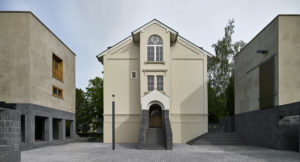
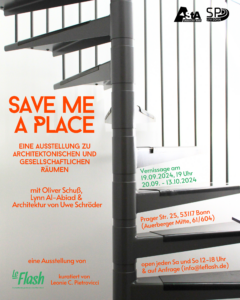
with Oliver Schuß, Lynn Al-Abiad and architecture by Uwe Schröder Vernissage on September 19th, 2024, 7 p.m. Exhibition period: September 20th - October 13th, 2024 Open every Saturday and Sunday, 12 p.m. - 6 p.m. and by arrangement (inquiries to info@leflash.de) Save Me a Place is divided into two thematic areas that show architectural and social spaces and involve the residents of the exhibition venue. The exhibition venue is the Prager Höfe by the architect Uwe Schröder, which can be found not far from the Auerberger Mitte in Bonn. The two courtyards combine to form a shared living space, which, through the architectural connections - from the ceiling, the courtyards to the central communal cellar - makes it possible for individuals to come together, from which a collective life emerges. Everyday sounds of the residents are transported through the basement and an 'art room' that connects the three levels of each house with a spiral staircase. Solitary and individual living in the houses fluctuates between distance & closeness and privacy & intimacy. The exhibition shows two artists on the architectural and social topics in the central basement, which is parallel to the communal courtyard. The presentation is complemented by a sound installation that emerges as a collective work of the residents. The architectural spaces are taken up by the works of Oliver Schuß, who shows wall objects made of steel and works specially developed for the location in the inner courtyard. The wall objects vary a handy (portrait) format and are set off individually through proportions and color, but remain recognizable as related to each other through their basic shape. With slits, openings and breaks in the surfaces of the works, he encourages visitors to experience new perspectives and reflect on ordinary points of view. His works stand alone and yet fit into the space with which they correspond. In the context of the exhibition, this stimulates the visitors' thoughts about where they are geographically, but also what connections there are to the other rooms. For this purpose, sight lines to the art rooms of the individual apartments are made accessible. The social space that allows and encourages coexistence through the connecting architecture of the Prague courtyards is taken up in Lynn Al-Abiad's series of works. Her photographs show sections of her home in Beirut. Photographs of the interiors and the surroundings show a life that takes place in private and public spaces and with which she has an intimate relationship. Even if they have different layers, she sees her works above all as an invitation into her home. The photographs convey a closeness to the place and to the people depicted, who are sometimes more clearly recognizable, sometimes more unclearly, and leave room for individual references. The invitation to the artist's home can be understood as a counterpart to the invitation to the private rooms of the Prager Höfe, which are accessible during the exhibition. About the artists: Oliver Schuß (*1985, lives and works in Bonn and Karlsruhe) studied painting and graphics at the State Academy of Fine Arts Karlsruhe under Prof. Meuser (2005 - 2011). His work to date includes the media of drawing and sculpture. The wall objects, mostly made of painted steel, pose questions about the understanding of perspectives and invite viewers to experience spatiality in a new way. They formulate basic geometric shapes and break them up using kinks, bends, notches and perforations. Due to the curvature of the material, the objects lean from the wall into the room, creating shadows that draw the concrete object into abstraction. He has been regularly represented in exhibitions since 2009 and most recently exhibited in Offenburg and Munich (both in 2024). In 2023 he most recently won the NEUSTARTplus work scholarship, which is awarded by the Stiftung Kunstfonds. Lynn Al-Abiad (*1995, lives and works in Cologne) studied Cinema and Audiovisual Directing at the L'Academie Libanaise des Beaux-Arts in Beirut and currently at the Art Academy in Cologne (KHM), with a focus on photography. Her series of works always have a personal connection and depict places, people and nature. In doing so, she reveals privacy and memories that lie in nearby surroundings as well as in her hometown of Beirut. The theme of home is omnipresent in her work and is treated in different ways. In addition to different places, she also creates references to nature, which she sees as the home of every person. The artist has exhibited her series of works at the Case project space in Cologne, among others. Curated by Leonie Cecilia Pietrovicci Photographs of art / architecture can be found in the documents attached below. The exhibition is promoted and supported by: AStA University of Bonn, Student Parliament University of Bonn, Le Flash – The cultural magazine from the Rhineland

Company | News
This concerns all tenants of MIWO Imminent danger from invasive hornet species A dangerous invasive hornet species, the "Asian hornet Vespa velutina", is currently spreading in Europe. It has already been sighted several times in the Bonn area and in the Rhein-Sieg district (and has been successfully removed professionally). The "Asian hornet Vespa velutina" prefers to build its nests in dense hedges, ground cover, ivy, and treetops. This species of hornet is very dangerous and attacks its "intruders" immediately if the nest is shaken. Just a few stings can be life-threatening. You can find further important information on the subject of the Asian hornet Vespa velutina on the website: https://vespa-velutina.nrw Please also inform your family members, relatives, friends, and neighbors of the great danger. Above all, you should inform your children about the impending danger and not let them play unsupervised in bushes, gardens, or parks. Before use, please carefully and attentively search the playground and your terraces / balconies for nests. We have also sensitized our gardeners and caretakers to this issue and to carefully monitor all MIWO sites, as they look after the green spaces and in particular the hedges and are therefore also directly at risk. If you discover a nest on your balcony, terrace, on our premises or on public green spaces, do not hesitate to contact the following specialist immediately (including at weekends for emergencies involving wasps and hornets) and seek advice: Mr. Klaus Maresch, telephone number: 0228 97638460; mobile: 015209795271. Mr. Maresch, also known to the "Lower Nature Conservation Authority of Bonn" as well as the "Lower Nature Conservation Authority of the Rhein-Sieg District", has been working in and around Bonn for many years as a reliable advisor and relocator for all things related to the "buzzing guild". Please note that removing nests, e.g. of wasps, bees and hornets, which are not aggressive and dangerous, may incur costs for you! Stay alert! Your MIWO team
Company | News
The city of Bonn sends out amended tax notices The council decides on fee rates for 2024 On December 12, 2023, the city council of Bonn decided on the fee rates for wastewater disposal, garbage disposal and street cleaning for 2024 and agreed to an increase in the fee rates. The basis of the decision is the generally higher costs due to inflation, such as the increased and future rising material and personnel costs. According to the city of Bonn, “the cost-coverage principle also applies to the fee rates: the fee revenue should generally cover the costs, but must not exceed them.” The city of Bonn published an information letter on its website on December 13, 2023 with facts and “explanations on the “Real estate tax notice 2024” has been published, which contains important information and explanations from the city administration for every tenant, and also informs that the tax notices have already been sent by post. The complete information letter dated December 13, 2023 can be found on the City of Bonn website at www.Bonn.de / Press Releases (see link above: The Council decides on fee rates for 2024 | Federal City of Bonn). We are also attaching a copy of the general letter from the city of Bonn to all tenants, in which you will also be informed in detail about how the fee rates for the individual items “residual waste disposal, street cleaning, dirty water and rainwater” will increase compared to the previous year become. In this letter, the city of Bonn also points out the newly calculated property tax, which will be due from January 1st, 2025 (see link below under Documents: Explanations to the property tax notice 2024 | Federal City of Bonn).

Company | News
Cat's out! We would like to realize another art project as part of "kunstundwohnen" in 2023. For the implementation of her art project, the artist Pia Stadtbäumer has chosen the stairwell at Lutfridstraße 12 in Bonn and plans to realize her project there with the working title "Cat's out!". Cat's out! is a short narrative, an imagination, and a play between the presence and absence of a possible event. The artist Pia Stadtbäumer was born in Münster. In the 1980s, she studied at the Düsseldorf Art Academy. Numerous scholarships and awards followed. From 1996, Pia Stadtbäumer taught for four semesters at the Academy of Fine Arts in Munich. In 2001, she was appointed Professor of Sculpture at the HFBK Hamburg. In 2019, she was awarded the Carl Ernst Osthaus Prize by the City of Hagen. Pia Stadtbäumer has been a member of the Quivid art commission in Munich since 2016 and a member of the Düsseldorf art commission from 2020 to 2024. She has had numerous exhibitions in Germany and abroad. The artist lives and works in Hamburg and Düsseldorf. More about the project, with a text by art historian Beate Eckstein / Pia Stadtbäumer, can be found under Companies | Culture – kunstundwohnen #17 . With these interventions, in the immediate vicinity of Karim Noureldin's "Tupelo," Esther Stocker's "Geometria," and Jan van der Ploeg's "Wall Painting No. 412," which were also created as part of the kunstundwohnen series, the "Kunstquartier Lutfridstraße" is enriched with another art object.
Company | News
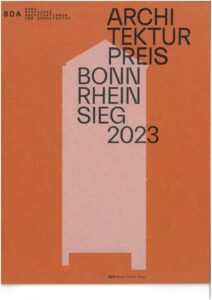
Exhibition on the BDA Architecture Prize in the Art Museum The architect Uwe Schröder and MIWO GmbH & CO. KG were awarded the 2023 Architecture Prize by the BDA Bonn-Rhein-Sieg for the “Haus im Burggarten” building on November 9, 2023 at the Bonn Art Museum. The jury also awarded “Recognition” for the “Prague Houses” project. You can find more information about the award ceremony and the buildings under the links. Until November 26, 2023, TUE-SUN 11 a.m. - 6 p.m., WED 11 a.m. - 9 p.m., all 16 award-winning and submitted projects/buildings will be presented to the public in an exhibition in the art museum.

Company | News
With the series “Here I live” the General-Anzeiger paid particular attention to striking and sensational buildings in the Hardtberg district and the Bonn area and visited some of them to ask the residents what the “special buildings” were like there “ lives and what interesting story there is to tell about the building. This is what happened at our ROM.HOF on Siemensstrasse in Bonn-Endenich: “...After seeing towers, castles, signalman's houses and many others, I now had the opportunity to speak to a student at the ROM.HOF in order to talk about what has been going on for a long time “To be able to write about the building I admired,” said Stefan Hermes – Generalanzeiger. The entire article, published in the Gerneral-Anzeiger Bonn – Hartberg on page 20 on Monday, September 11, 2023, can be found at the link below.
Company | News
The City of Bonn sends out tax notices On March 23, 2023, the Council of the Federal City of Bonn decided in its meeting on retrospectively changed fee rates for street cleaning, sewage and waste disposal for periods before January 1, 2023. The city of Bonn published a corresponding article on its website on June 13, 2023 that the city administration has now started sending out the corresponding tax assessment notices. In the meantime, the city administration has created the technical prerequisites so that the outstanding assessments can be made up from Wednesday, June 14, 2023. The citizens affected by this will therefore be promptly sent the corresponding assessment notices by post. The full article with detailed information from June 13, 2023 can be found on the City of Bonn’s website at www.Bonn.de/Press Releases (see link: City sends tax assessment notices | Federal City of Bonn).